
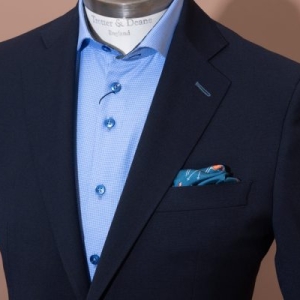
💎 Research has shown that dressing well and maintaining a polished appearance in the workplace can have a significant impact on professional success. Wearing appropriate attire at work can influence how others perceive your personality, your level of self-confidence, and even the way you think.
💎 Researchers conducted a study involving 128 men between the ages of 18 and 32, asking participants to engage in simulated buying and selling negotiations.
The participants were divided into three groups based on their clothing. The first group wore casual, poorly presented attire, such as sweatpants and sandals, and achieved a hypothetical profit of $680,000.
In contrast, the second group, whose members wore business suits, earned approximately $2.1 million, while the third group, dressed in ordinary casual clothing, achieved around $1.58 million.
💎 These differences in negotiation outcomes suggest that participants who were less formally dressed were more likely to make concessions to those wearing suits.
Meanwhile, participants dressed in business suits perceived a greater sense of respect and authority, which made them less willing to compromise and significantly increased their self-confidence.
💎 In another study, researchers found that participants wearing formal, well-presented clothing demonstrated more creative, strategic, and forward-looking thinking, similar to the mindset typically associated with executives and senior managers.
By contrast, individuals wearing less formal attire tended to focus more heavily on minor details rather than the broader picture.
💎 Michael L. Slepian, one of the study’s co-authors and an assistant professor at Columbia Business School, explains:
“People who wear formal, well-tailored clothing tend to feel more powerful. And when individuals feel powerful, they are less likely to become preoccupied with minor details.”
💎 These findings may offer valuable insights into how we approach our everyday professional attire.
However, when choosing what to wear to work, consider following the “One Step Above” rule.
This principle suggests dressing slightly more formally than the standard dress code in your workplace.
For example, if most of your colleagues typically wear casual shirts, you might consider adding a blazer to your outfit.
Similarly, if most people in your workplace usually wear blazers, you could take your professional appearance one step further by wearing a full business suit.

